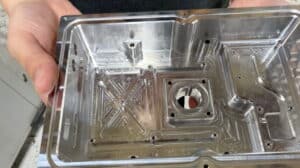



Advance CNC Machining sees the instability of cutting tool costs not as a blip but as a structural change. Here are the moves the shop has made to buffer part production cost against continuing tungsten carbide price rises.
Tungsten carbide cutting tool prices have risen dramatically. Machine shops everywhere are experiencing the increase, coupled with the uncertainty around future increases. However, the full magnitude of this effect does not have to be felt all through the supply chain. A central Ohio machining provider for aerospace and defense markets is succeeding with tactics for controlling cutting tool cost changes and limiting their impact on the price of production.
Advance CNC Machining of Grove City, Ohio, has seen the price of a representative solid-carbide end mill rise by 20 to 30 percent in the past year. And the higher price is not even the primary challenge. More concerning is what comes next: Cutting tool suppliers warn of additional increases to come, with amount and timing both uncertain. That uncertainty introduces volatility into a major cost component of machining, complicating quoting and long-term commitments, even as the company seeks to serve markets where consistency and reliability are paramount.
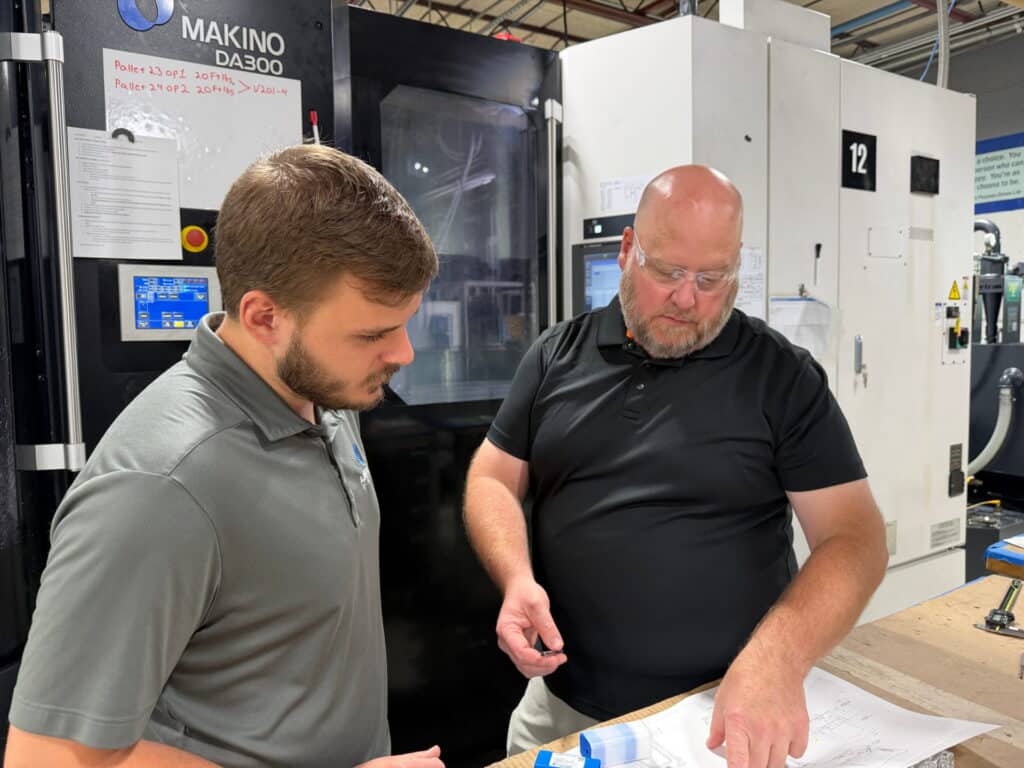
And in all of this, Advance CNC is not unique. What distinguishes this machining provider is the set of disciplines and innovations it has been able to bring to the problem. The company specializes in four- and five-axis CNC machining for aerospace and defense, supported by pallet-system automation. Its experience mixing ongoing production and short-lead-time jobs within these same platforms has fostered a culture that is simultaneously structured and adaptable, yet better equipped than many manufacturing teams to respond to instability without sacrificing control.
Two leaders who have been focused on the response to cutting tool price changes are VP of Machining Technology Kyle Dunaway and Tooling Manager Derek Maschmann. Both are helping to drive a set of evolving tactics aimed at containing the impact of this cost.
“It’s a really unstable market for carbide tools,” Maschmann says. Price increases are not even consistent from supplier to supplier. “It’s hard to make lasting decisions when you don’t know what it’s going to look like two weeks down the road.”
Yet they both also emphasize a principle that has not changed. Though tools matter, cutting tools still are not the dominant factor driving the economics or the success of any job. “Tooling is five to seven percent of your cost to machine a part,” Maschmann says. “If you can get more parts out the door, then an increase in the cost of the tool that lets you do this shouldn’t overly influence decisions.” This remains true even at higher prices.
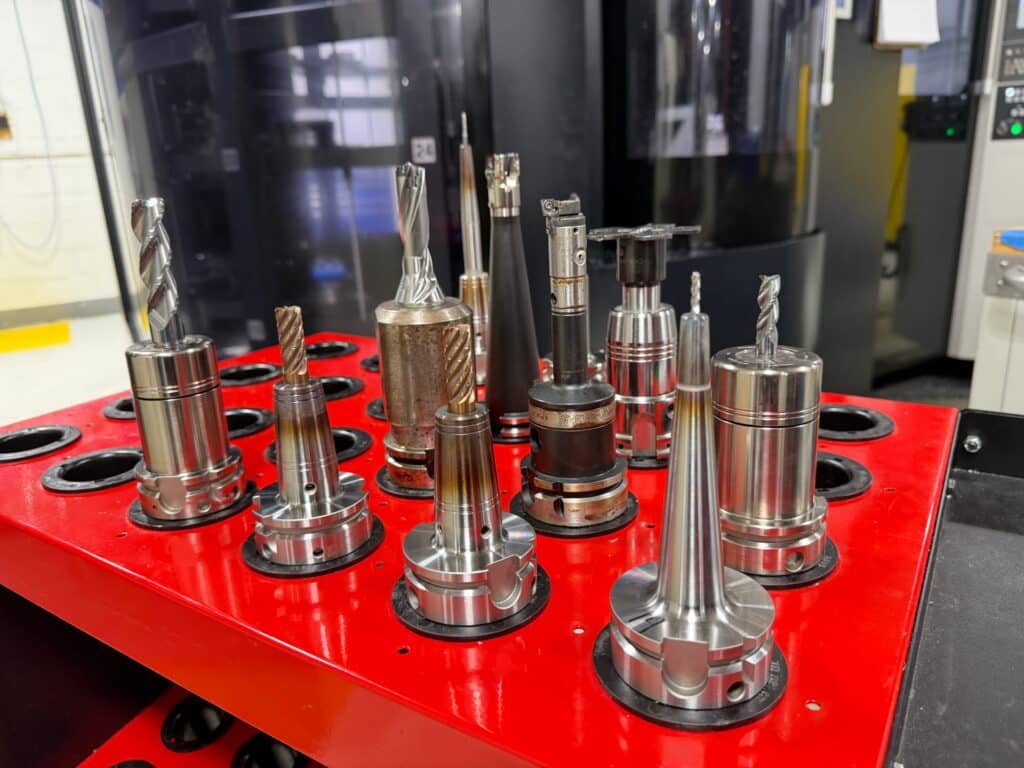
In other words, responding to rising tool prices cannot come at the expense of throughput, process control, or quality. Therefore, Advance CNC is addressing tooling cost through adaptation rather than compromise. The combination of tactics helping the company limit the impact of rising prices includes (A) more deliberately selecting tools to match machined features, (B) expanding the sourcing strategy, (C) resale of lightly used tools, and (D) exploration of alternatives to carbide.
First, it is worth understanding how and why carbide prices began to shoot up in the first place.
Why Are Carbide Cutting Tool Prices Increasing?
The forces driving up the price of carbide cutting tools for a machine shop in Ohio originate on the other side of the globe. At the center of the change is tungsten, a necessary ingredient in carbide, which has become harder to source internationally. Global supply of tungsten is highly concentrated, with China dominating both mining and processing. Recent export controls by China over tungsten and other materials have constrained the supply.
Meanwhile, demand remains high. Aerospace and defense manufacturing, along with other expanding sectors such as semiconductors and the battery needs in automotive, continue to consume both tungsten and the high-performance tools made with it. Plus, cobalt—used as a binder in many carbide tool grades—is under similar supply constraints, adding to the pressure.
The result is not simply higher prices, but less predictable ones. Where cutting tool costs once tended to rise gradually and with some regularity, suppliers are now issuing increases that vary widely depending on the individual producers’ sourcing predicaments and levels of vertical integration. For machine shops dependent on cutting tools as an essential component of their work, this unevenness adds a new layer of uncertainty to the daily challenge of machining cost-effectively.
And Advance CNC accepts this shift as more or less permanent, say Dunaway and Maschmann. The volatility may settle out, but higher prices and faster-rising prices for carbide represent a structural change rather than a disruption. The economics of tooling are being reset by a combination of constrained raw materials, geopolitical influence and sustained industrial demand. That reality means lasting change is warranted as part of the ways machining operations have to respond.
The Wrong Response: Chasing Lower Tool Cost
Faced with rising and uncertain tool prices, Dunaway says the most obvious response, to spend less on tooling, is also likely to be the least effective. Switching to lower-performance tools, running tools longer, or simplifying the tool library to reduce purchasing complexity all appear to offset higher prices, while ultimately they impair the success of the process and add greater cost elsewhere.
Again, tooling is five to seven percent of cost. Tooling price rises likely will raise that percentage. Yet other contributors to cost are apt to change to an even greater extent if the proper tooling investment is not made.
For example, lower-grade tooling saves purchase cost but brings shorter tool life, adding labor cost for more frequent tool change. Similarly, pushing tools deeper into their wear curve may extract more work from each tool on paper, but increases the likelihood of tool failure leading to unplanned intervention.
For Advance CNC, the conclusion is straightforward: Responding to higher tool prices by compromising on tooling is a losing strategy. The company’s approach instead starts by protecting what matters most—machine utilization and process stability—and then working to control cost within these constraints.
Automation as the Foundation of Tooling Strategy
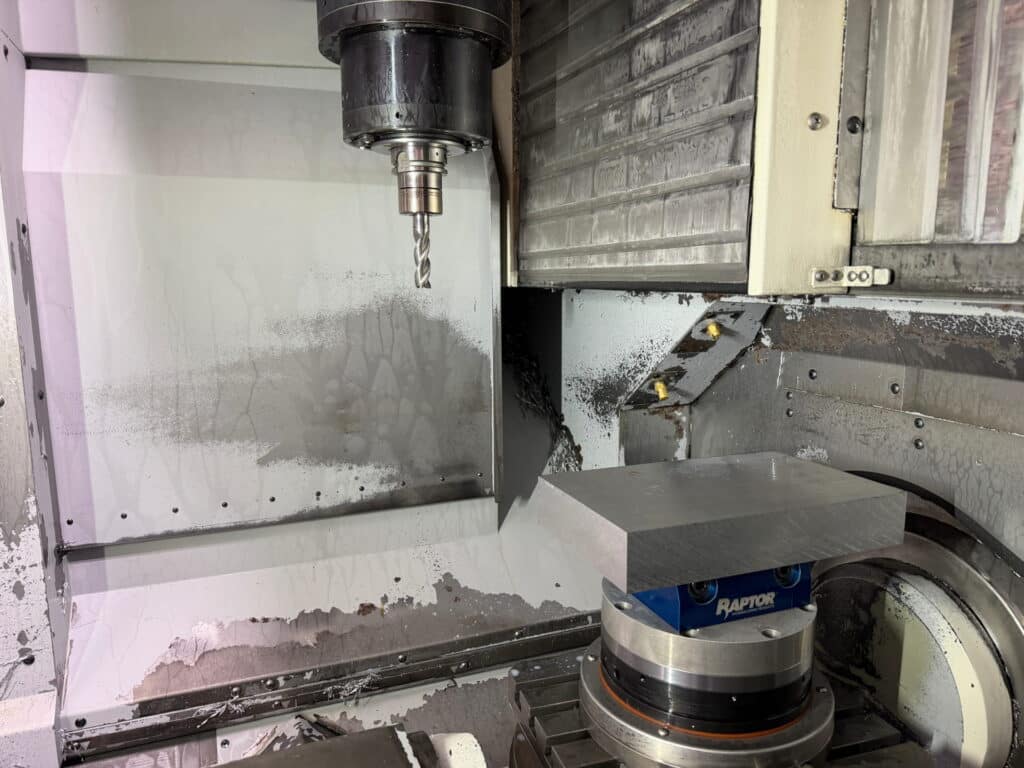
As a result, any discussion of tooling for Advance CNC has to begin with automation. The company’s machining processes are built around palletized systems allowing horizontal machining centers to perform for extended periods of unattended operation. This kind of automation changes what matters in tooling. Because the process cannot be reliant on oversight or real-time manual process adjustment, consequential variables have to be known and controlled, including the condition of the tool.
The shop’s standard practice therefore involves beginning each production run with a new tool and replacing tools before any appreciable change in the edge. Never mind running tools to failure—there is not even any running tools to the onset of meaningful wear.
“We can’t put a tool with 80 percent remaining life into a process that might be expecting 100 percent,” Maschmann says.
This discipline obviously imposes a cost: Tools are not consumed fully; the value of a tool in terms of its usable life often is not realized. However, in an automated system, the cost of unpredictability far exceeds the value of obtaining an additional increment of cutting from any tool.
In this sense, then, the tooling strategy is not about the tool. The strategy focuses instead on assuring the integrity of the process. The tool price is not the only cost at stake, because managing tooling to preserve reliability also affects throughput, efficiency and delivery.
So how does the shop control tool cost within the constraint of these priorities, in which tool cost is not permitted to be a driving factor?
Advance CNC has found five tactics—all of them departures from the way it once sourced and managed tools—that fit the new reality of cutting tool pricing.

Tactic 1: More Deliberate Tool Selection (Less General-Purpose Thinking)
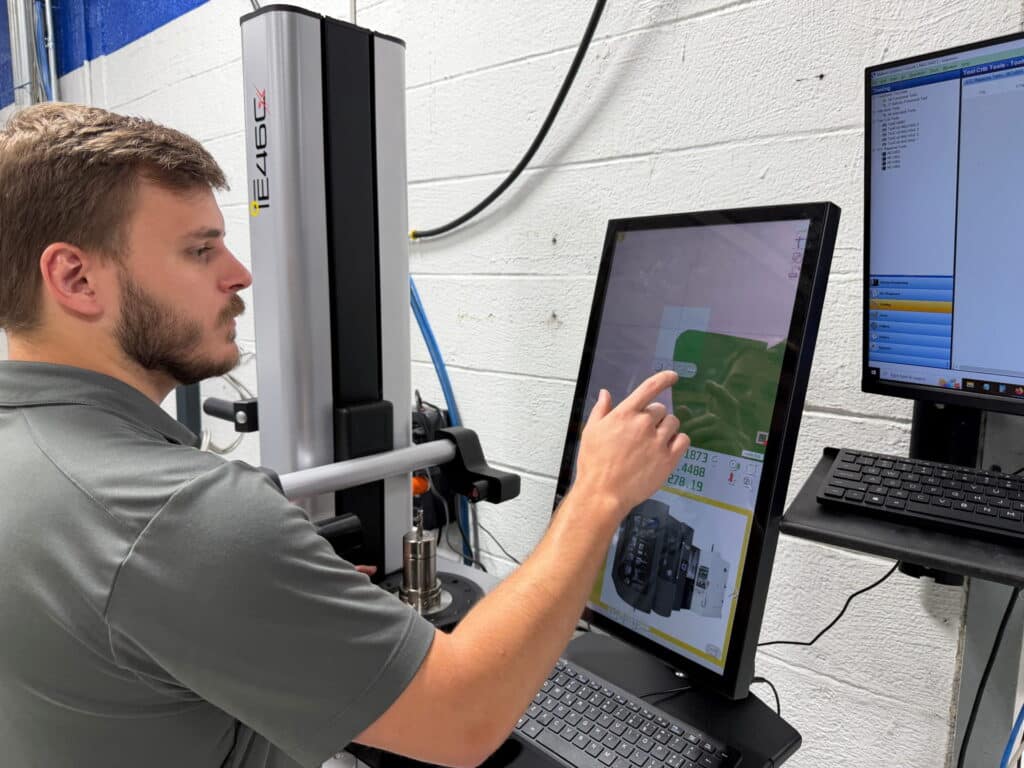
One of the clearest changes the shop has made in response to rising tool costs is a shift toward greater use of tools designed for specific operations. This shift is essentially an investment in greater time and attention for programming and tool management.
In the past, relying on general-purpose carbide tools helped make programming simpler and purchasing more efficient. But today, that tradeoff—fewer tools to keep track of, even if the tool is not the ideal choice for the cut—is harder to justify. Today, part programming more commonly goes feature by feature, with tools chosen for their suitability to each separate feature.
This has led to a broader and more specialized tool library, with individual tools selected for their ability to remove material faster, hold tolerance more consistently or last more predictably through some particular step in the machining cycle.
Some examples Dunaway cites: “We think carefully about just the right tool for small features, as well as the right tool for different cases of heavy stock removal.” In these cases, rather than doing well with an available tool that will serve the need, “We pick an optimized tool for that feature that lets us get closest to what that tool is best able to do.”
The shift places greater demands on the programmer to select just the right tool for each cut, and on tool management to oversee the expanded tooling array. Today, these investments in greater attention are prices worth paying.
Tactic 2: Multi-Sourcing and Price Leverage
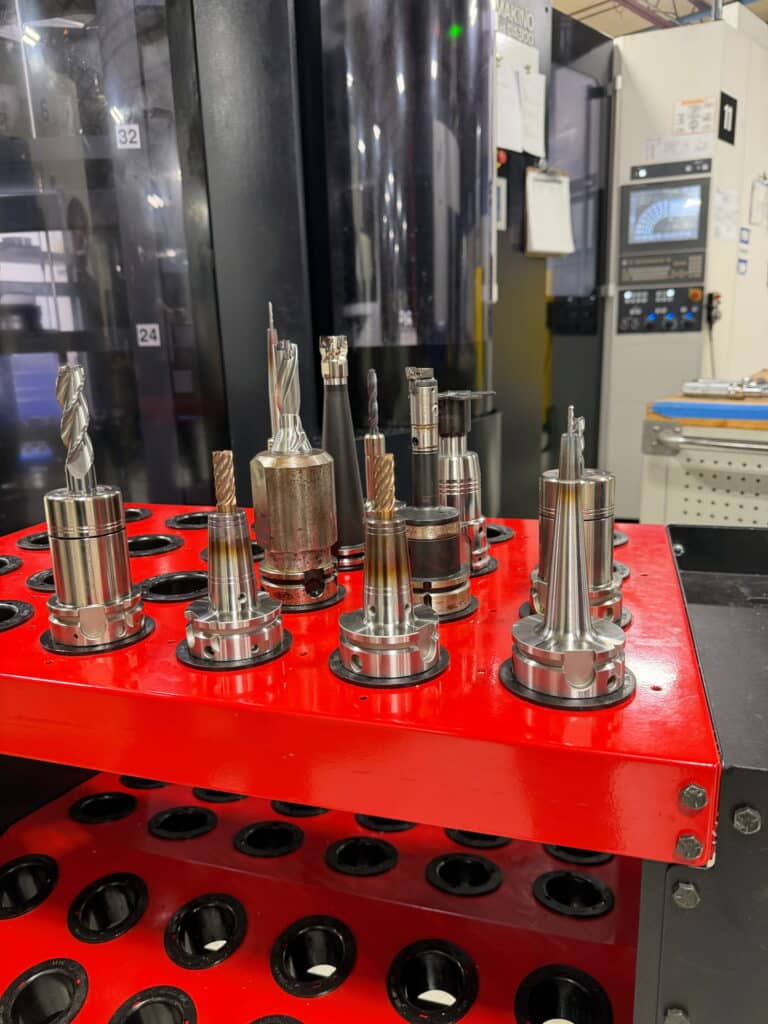
Alongside technical decisions about how tools are used, Advance CNC is also addressing cost and uncertainty through new procedures in how tools are sourced. In an environment of stable tool pricing, developing a close relationship with one strong tool provider is advantageous. But in the new environment, the shop deliberately avoids becoming tied to a single supplier or even a small number of suppliers. The company instead maintains relationships with various tooling sources to maintain flexibility in pricing and availability.
The approach offers more than just a little savings, Maschmann says. The tungsten market changes are so dramatic and new that different tool manufacturers are often affected very differently by supply constraint shifts, depending on how vertically integrated they are and on their sourcing chain for the raw material. By maintaining multiple channels, Advance CNC can pivot its purchases to benefit from these differences.
Tactic 3: High-Performance Tools as a Cost-Control Strategy
Not only has it resisted lower-cost tools, Maschmann notes, but Advance CNC has in fact committed to the opposite course. The shop has shifted to even higher-performance tools in some cases, counterintuitively pursuing cost saving with even higher-price choices.
The reason is rooted in the economics of machining. If a higher-performing tool runs faster or maintains cutting performance longer within a predictable window, then those gains reduce cycle time or labor involvement. This kind of gain makes sense even in the absence of significant tool price rises. However, when the cost of tools in general is moving higher, stepping up to even higher-performing options in strategic cases becomes an expense that is more readily absorbable within the changed cost overall.
Stated another way: If tool cost is going to rise anyway, then work within that context to invest for savings in other areas.

Tactic 4: Resale of Lightly Used Tooling
This is perhaps the most extreme or unconventional of Advance CNC’s responses to rising tool cost: It has become a tool supplier.
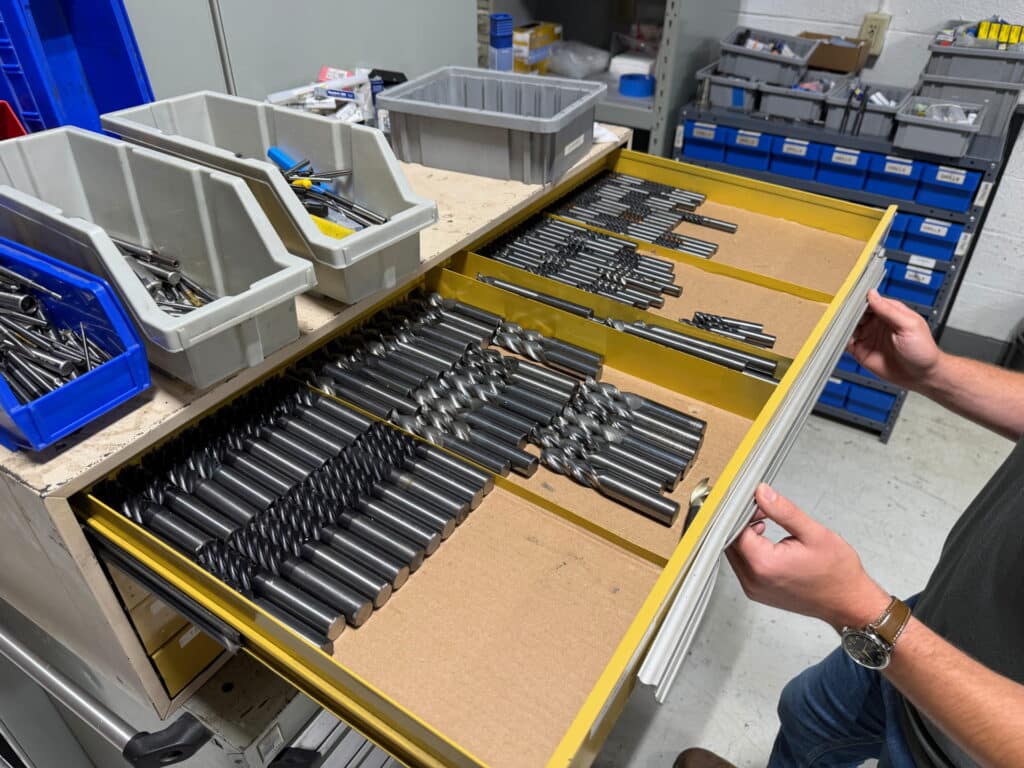
Because the company does not run tools to the onset of significant wear, it routinely stores tools that still have significant usable life remaining. In the past, these used tools sat in inventory waiting for some non-critical need. Today, Advance CNC recaptures cost by selling the tools. The company has launched a program to resell lightly used high-performance tooling that no longer meets the requirements of its automated processes.
Selling these tools brings more return than carbide scrap. Meanwhile, for the shops buying the tools—smaller shops with less tooling budget—this secondary market for tooling meaningfully expands the tooling options available.
Tactic 5: Exploring Carbide Alternatives (PCD and Beyond)
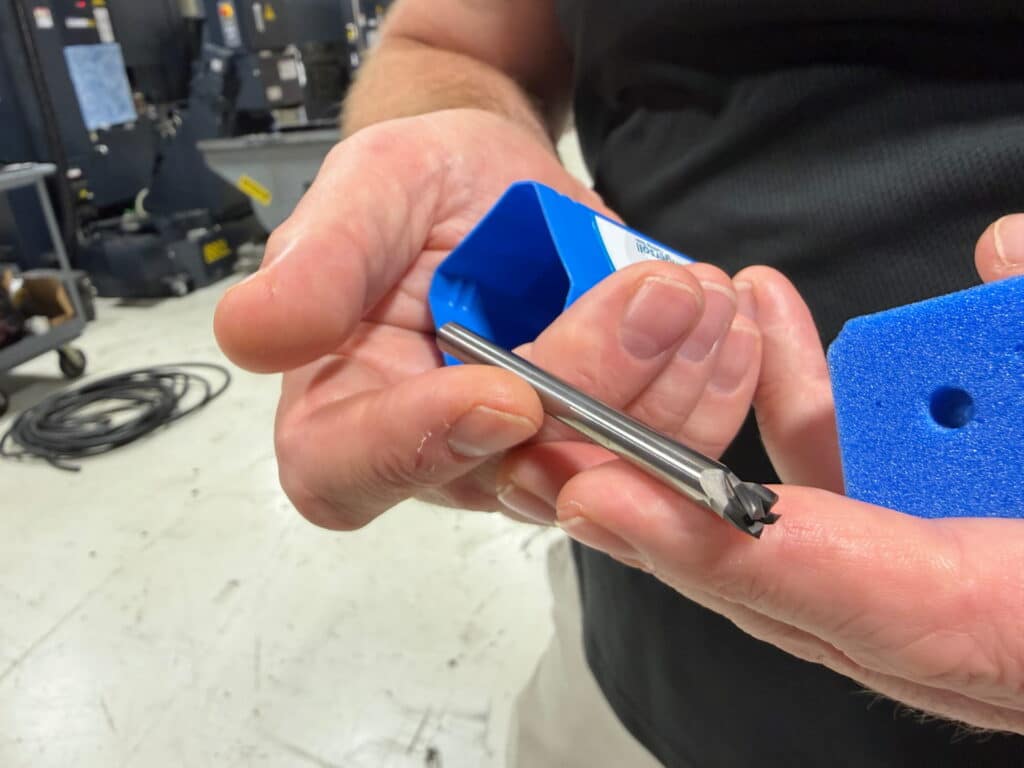
Rising carbide costs are also prompting the Advance CNC team to revisit tooling options that previously held less appeal. Among these is polycrystalline diamond (PCD), a tool material that has long offered advantages in aluminum (the shop’s most common part material), coupled with cost and process considerations that are not as inhibiting as they once were.
Specifically, PCD tools have a high upfront price relative to carbide, and they require a different approach to machining. Cutting behavior and toolpath strategy differ from carbide, as does chip management, because the very fine chips produced by a PCD tool present challenges in chip evacuation over long runs.
All these differences have favored carbide in previous times, but now the balance is shifting. As carbide prices have destabilized, a tool offering long life and high performance in combination with a predictable price now warrants a careful second look.
Carbide will still be the predominant choice, Dunaway says. But he is spearheading the work of selectively evaluating where PCD can best add value within the constraints and priorities of Advance CNC’s processes. This includes assessing tool life, cutting performance, and how well a given tool can integrate into the automated workflow.
“We have to seriously evaluate where those tools make sense,” he says.
There was never a need to do this before. The assumption until now has been that cutting tools are generally carbide. Now, a lasting result of surging tungsten prices is likely to be greater application of non-carbide within a more diverse set of tooling options than what the shop was previously prepared to accept.
Implication for Aerospace and Defense Buyers
For aerospace and defense OEMs and Tier 1 suppliers, volatile carbide tool prices are a supplier-side issue significant enough to ripple into quoting and lead times, but the ripples can be damped. The question is not solely whether suppliers are affected by the cost changes, but also how they are managing the effects.
A sophisticated machining supplier has tactics to employ that operate at points of leverage other than tool purchasing. More granular application of tooling, recapture of tool cost, and even doubling down on high-performance tools all are part of the response. The result is not immunity from cost increases, but insulation from the worst of their disruption.
In this way, rising carbide prices offer a test of supplier and system resilience. In fact, because some of the tactics include shifts away from reliance on foreign-sourced material, the result might be even more transformative. By encouraging a more widespread use of alternate tool materials such as PCD, the rising carbide prices may be helping to bring about not just greater resilience, but greater independence as well.
About the Author
Peter Zelinski is a technology journalist who has reported on manufacturing for over 25 years.