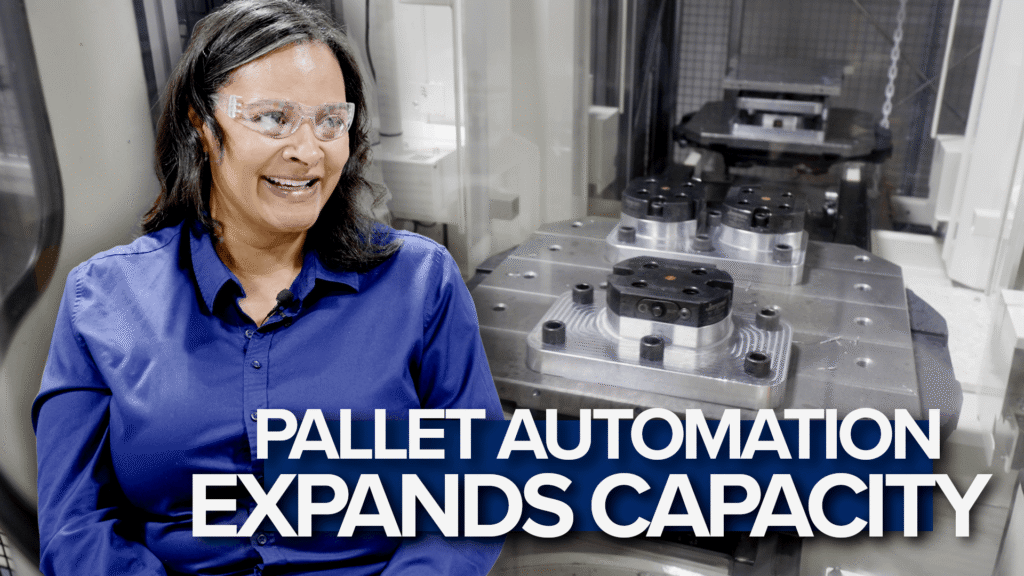



A complex machined part does not automatically require 5-axis machining. Depending on part geometry, tolerances, quantity, fixturing, and production requirements, a 4-axis horizontal machining center can sometimes be the more efficient choice.
In this video, manufacturing journalist Peter Zelinski talks with Advance CNC Machining VP of Machining Technology Kyle Dunaway about how Advance CNC decides between 4-axis and 5-axis machining. Kyle explains how GD&T, work envelope, production quantity, and engineered fixturing all factor into choosing the right process for a particular component.
Kyle also shares an example of a component that Advance CNC was successfully producing through 5-axis machining but ultimately moved to 4-axis machining to reduce cycle time and increase production capacity while maintaining quality. The crucial insight is that the best machining process is not necessarily the one involving the greatest number of axes—it is the one best matched to the part and production requirements.
If your organization has a need for precision 4-axis and 5-axis machining from an AS9100-certified machine shop, we’d welcome the chance to become your trusted manufacturing partner. Please contact us today!